Seven days along Vietnam’s coast through soft sand, deep mud and layers of history
I am Clémence, a French woman who has lived in Vietnam for three years. After driving from Hanoi to Saigon in six days, we spent four intense days working at a travel fair. The fastest way home would have been a short flight. Instead, we climbed back into the same two 4WD vehicles and prepared to drive north for another seven days.
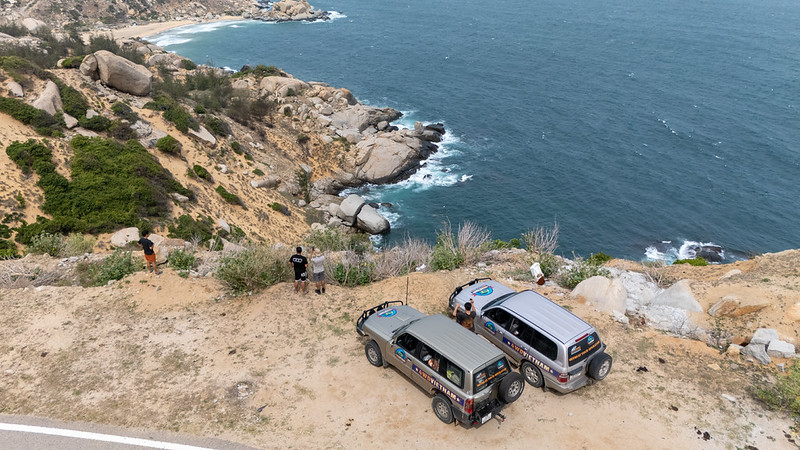
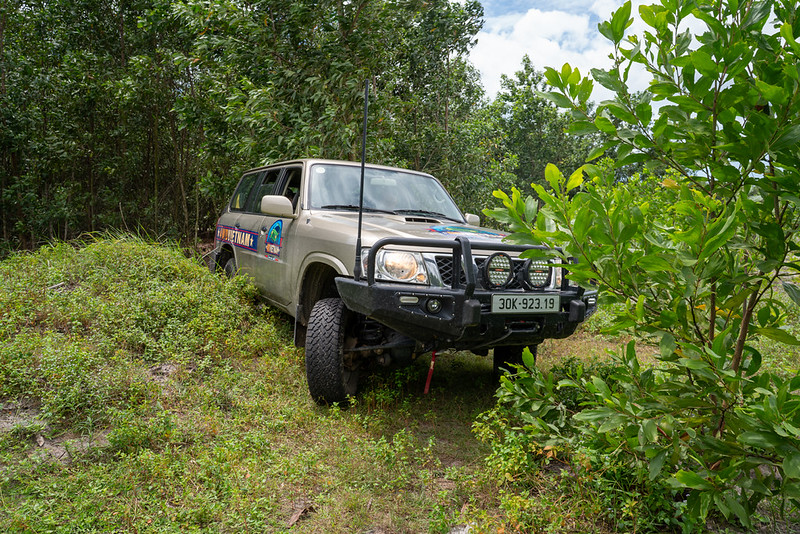
This time, we planned to follow the coast whenever possible. The route would bring fewer mountain trails than the journey south, but it would test the vehicles in sand, mud, waterlogged tracks and long hours on the road. It would also carry us through fishing villages, Cham heritage and places where Vietnam’s history is still impossible to ignore.
Day 1 – Escaping Saigon
We left the Saigon Exhibition and Convention Center around midday, tired from four days of meetings and already dreaming of sleep. Holiday traffic filled every road out of the city. Motorbikes surrounded the cars, rain covered the windscreens and, for a long time, Hanoi did not seem to be getting any closer.
Once the traffic finally loosened, we headed towards Vũng Tàu and the coast. Seeing the sea changed the mood inside the vehicles, but it did not give us back our energy. By 6:30 p.m., we accepted that pushing farther would only make the next day harder. We stopped in the fishing village of Phước Hải, found beds for the night and let both the drivers and the vehicles rest. After the fair, making the sensible decision to stop was our first challenge of the return journey.
Day 2 – Two vehicles in the same mud hole
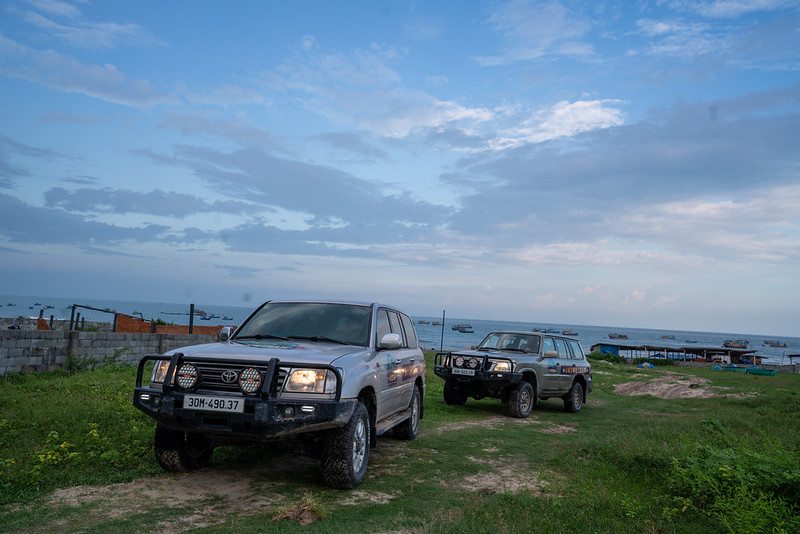
The next morning, we rejected the fast road and stayed close to the sea. Near Hồ Tràm, a sandy track tempted us towards the beach. It looked harmless from the cabin, but the tyres quickly began to sink and the vehicles lost momentum. We stopped before getting properly trapped. Soft sand, we were learning, can turn an easy-looking road into a problem within metres.
After a short two-kilometre loop and a stop among colourful fishing boats, we found a much more promising trail near Làng Chài Cam Bình. It passed through shrimp farms and soon became wet and muddy. Then the first vehicle entered a deep waterlogged section and stopped. Its wheels spun, muddy water rose around them and every attempt to move only pushed the car deeper.
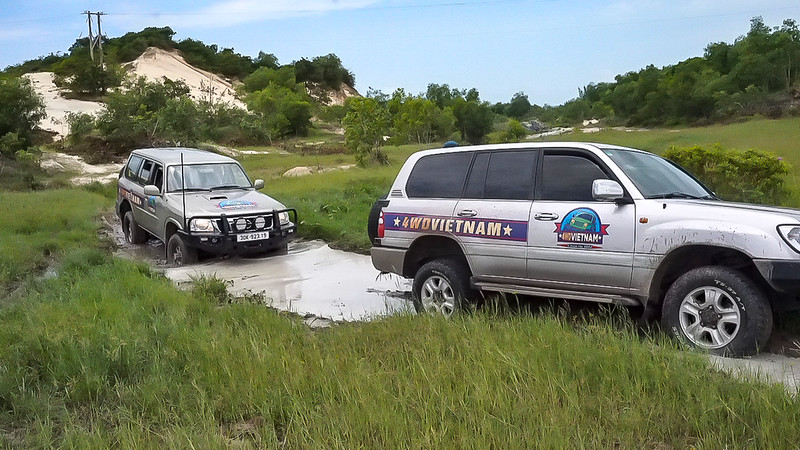
We brought the second 4WD forward, attached the towing equipment and prepared to pull. Then the second vehicle became stuck as well. For a moment, the whole team simply stared. We had not one but two cars trapped in the same mud hole.
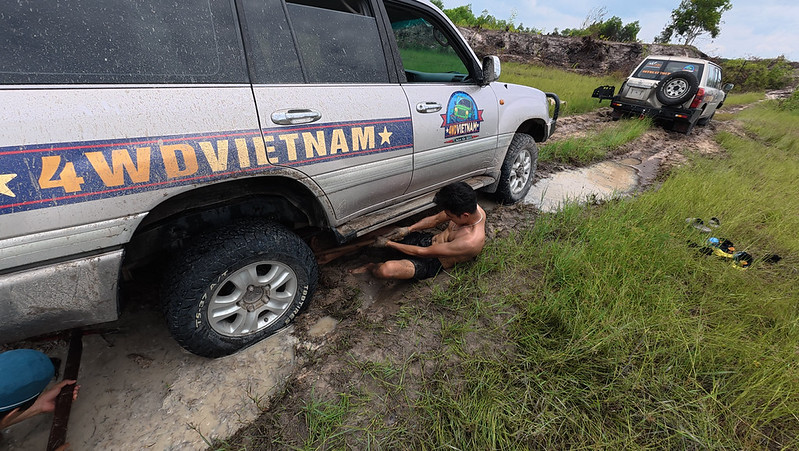
For more than two hours, everyone dug around the tires, cleared mud and repositioned the cable. It was hot, dirty work, and several attempts ended with the wheels sinking again. Eventually, one vehicle found enough grip to move. Once it was free, it pulled the second car back onto solid ground. The vehicles were filthy and we were exhausted, but the rescue showed exactly why preparation, patience and teamwork matter more than bravado off-road.
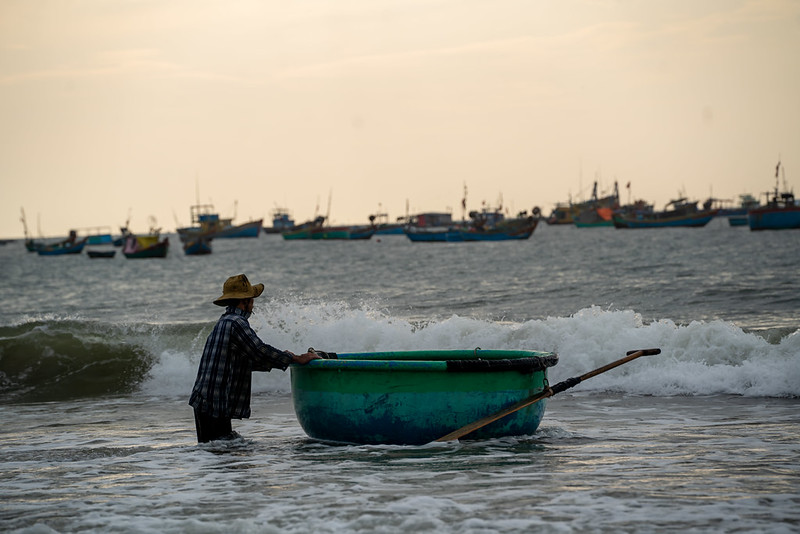
We stopped near Kê Gà before continuing to Mũi Né. Looking across the calm water after the chaos of the afternoon felt almost unreal. We reached our hotel around 7:10 p.m., with two moving vehicles and no desire to see another mud hole that evening.
Day 3 – Dunes and knowing when to turn back
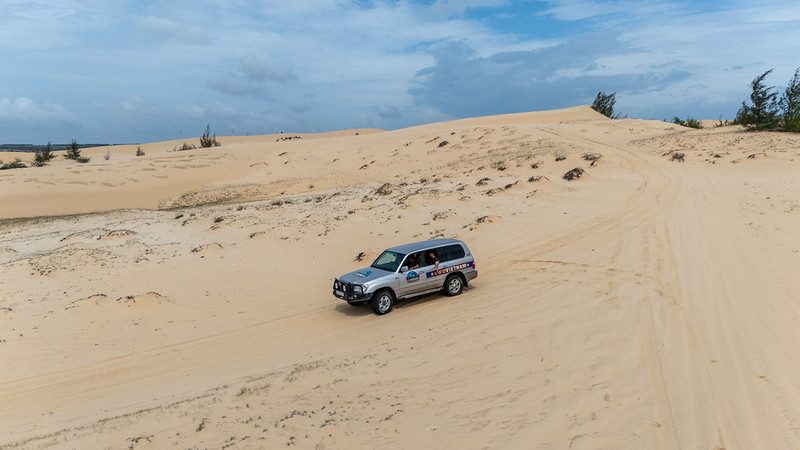
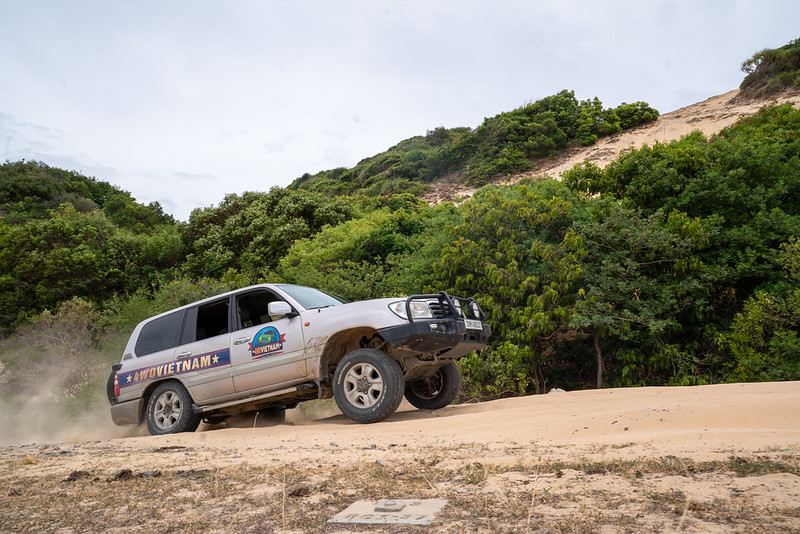
Both cars were ready again the next morning, so we entered a trail through the dunes near Mũi Né. The first section was firm and easy. Then the track climbed, the sand became softer and the tires began losing grip. The top looked close, but after the previous day’s rescue, nobody wanted to confuse determination with good judgement. These vehicles were not built to climb deep, loose dunes, so we turned around before another recovery became necessary.
The coastal road then led us past the powerful waves of Mũi La Gàn and a small temple where fishing families pray before going to sea and give thanks when they return safely. At Cà Ná, white salt fields replaced the dunes. Workers raked crystals from shallow evaporation ponds beneath the sun, while farther north shrimp farms spread across the dry landscape of Ninh Thuận.
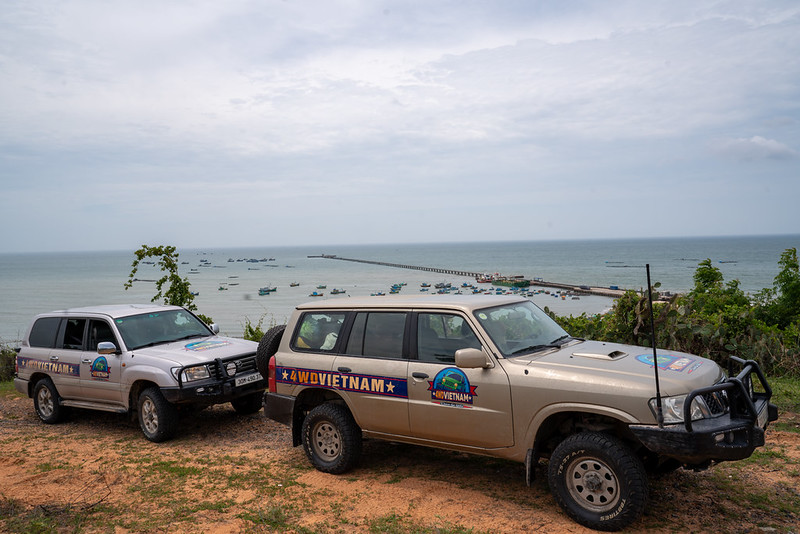
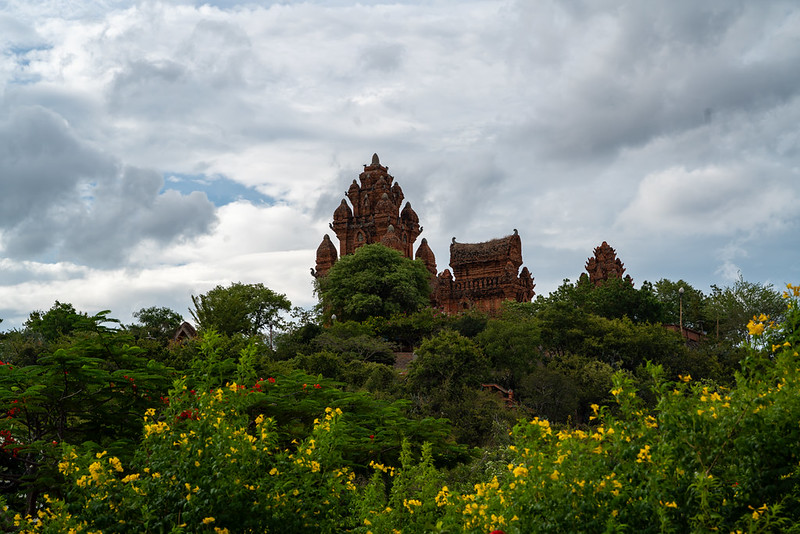
We stopped at the red-brick Po Klong Garai Cham towers near Phan Rang and later at a vineyard in Thái An. The vehicles had brought us through landscapes that changed almost hour by hour: sand, open sea, salt ponds, aquaculture, ancient towers and grapevines. We reached Nha Trang around 8:00 p.m. Best of all, nobody had spent the day digging a car out of the ground.
Day 4 – Coastal tracks and the story of Vũng Rô
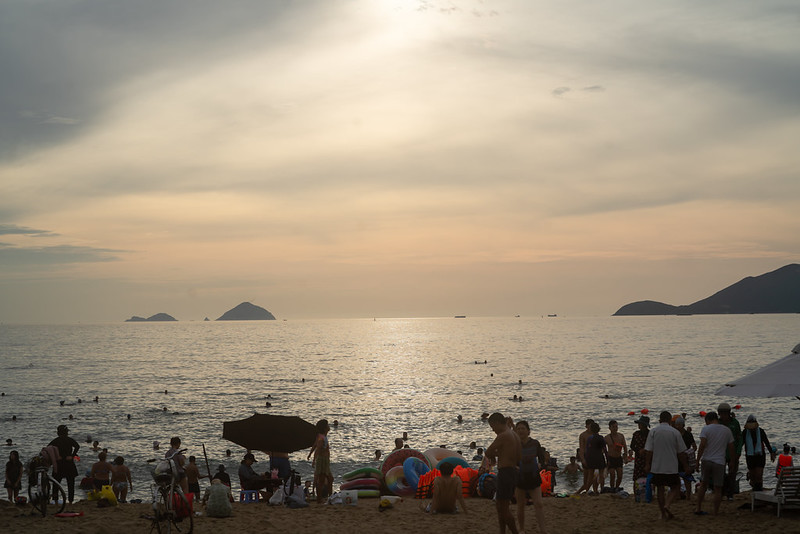
From Nha Trang, we once again chose the smaller roads near the coast. The route climbed above quiet bays before dropping towards long, almost empty beaches. Near Môn Hạ, we tested another trail mixing packed earth and sand. The beginning was enjoyable, but the sand grew deeper ahead. This time, the decision came quickly. We turned back before the tires could bury themselves.
Later, we stopped at Vũng Rô Bay. The calm water and green hills made it difficult to imagine the dangerous journeys once made here. During the Vietnam-American War, secret ‘Unnumbered Ships’ transported weapons and supplies from North to South along the maritime Hồ Chí Minh Trail, and Vũng Rô was one of their landing points. Reaching the bay by road made the contrast between its peaceful appearance and its wartime history especially striking.
The vehicles continued through Phú Yên, past beaches left empty by strong waves and coastal areas still recovering from a typhoon. Near Xuân Thành, an enormous oyster-farming area stretched across the sheltered water. Fishing boats, shrimp ponds, salt fields and oyster farms had turned the drive into a moving lesson about how communities live beside the sea.
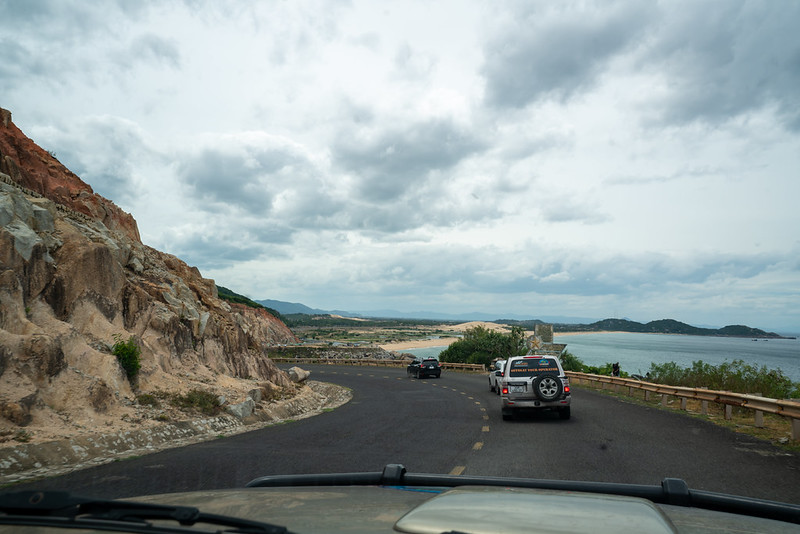
We reached Quy Nhon around 6:00 p.m. After four days, the cars had crossed soft sand that stopped us, mud that trapped us and coastal roads that changed constantly. The most technical part of the return journey was behind us, but three long days still separated us from Hanoi.
Day 5 – National Day and a road through history
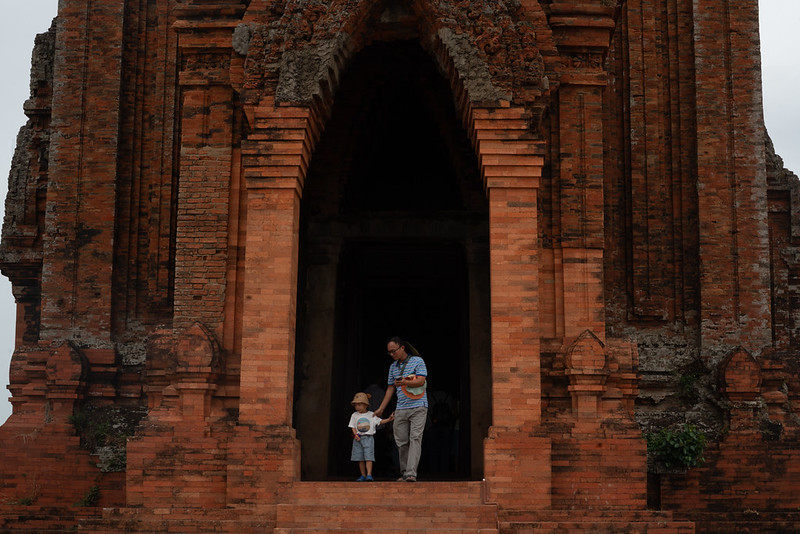
On 2 September, Vietnamese flags filled the streets for National Day as we left Quy Nhon. We stopped at Tháp Đôi and then Bánh Ít, where four Cham towers rise above the Bình Định countryside. Reaching them required a hot climb, but the view from the hill stretched across fields, villages and distant roads. From above, our two vehicles looked very small waiting below.
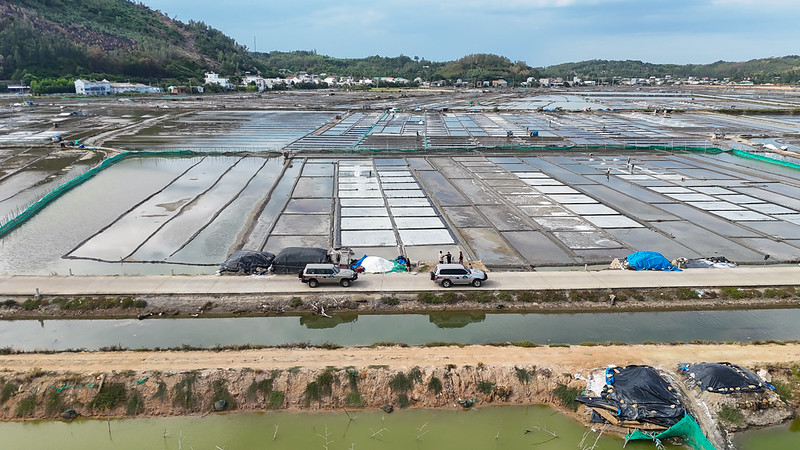
After seafood beside the sea and an unplanned swim, we drove on to the salt fields of Sa Huỳnh. The final stop changed the mood completely. We reached Sơn Mỹ too late to enter the museum, so we walked through the gardens, memorial statues and reconstructions of village homes connected to the Mỹ Lai massacre of 16 March 1968. Earlier, the cars had been filled with laughter after our swim. When we left Sơn Mỹ, everyone was quiet.
We arrived in Hội An shortly after 8:00 p.m. The familiar lanterns and warm lights felt almost unreal after a day that had moved from national celebration and Cham heritage to one of the war’s most painful memories.
Day 6 – Mountain bends and memory landscapes
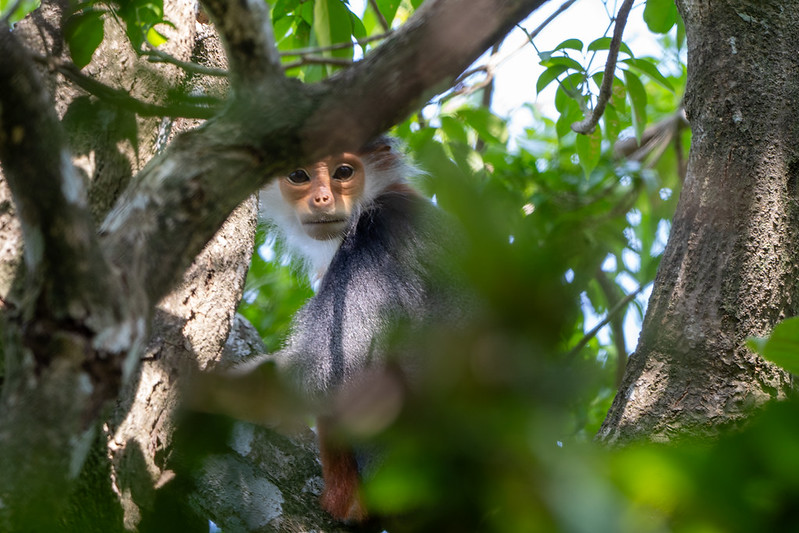
We left Hội An at 7:15 a.m. and drove to the Sơn Trà Peninsula. For almost an hour, we moved slowly and stopped repeatedly, searching the canopy for red-shanked douc langurs. When a family finally appeared above us, the patience felt worthwhile. The cars had taken us into their forest, but from that point the only useful thing we could do was switch off the engines, look up and wait.
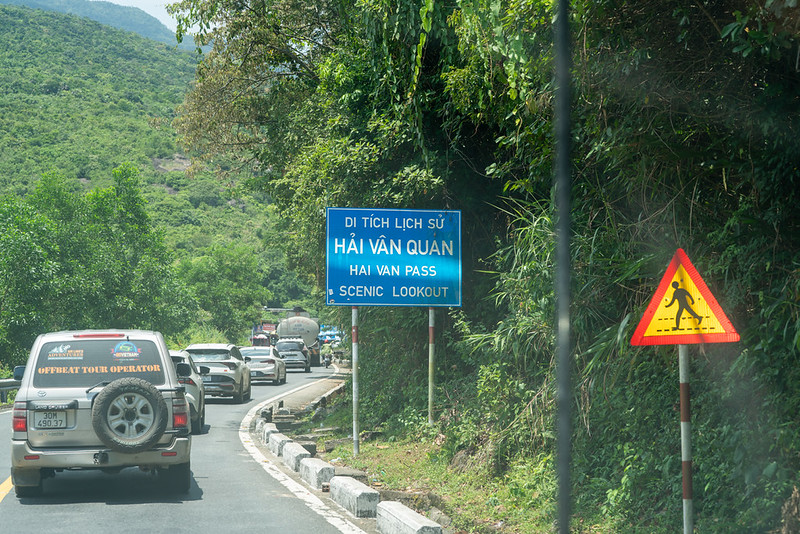
From Đà Nẵng, we crossed the Hải Vân Pass towards Huế. The road climbed between mountain and sea, revealing a new view at almost every bend before descending towards Lăng Cô. Beyond Huế, elaborate family tombs began filling the roadside. Near Hà Úc Church, some looked like small palaces, combining imperial, Buddhist, traditional and Catholic influences. We discovered them simply because driving allowed us to slow down and notice what stood beside the road.
In the afternoon, we reached Quảng Trị Citadel, a place of remembrance connected to the devastating battle of 1972. Later, we stopped at an outdoor display of wartime objects and remains. The vehicles became quiet spaces between visits, giving everyone time to process the contrast between today’s green landscape and the violence it had witnessed.
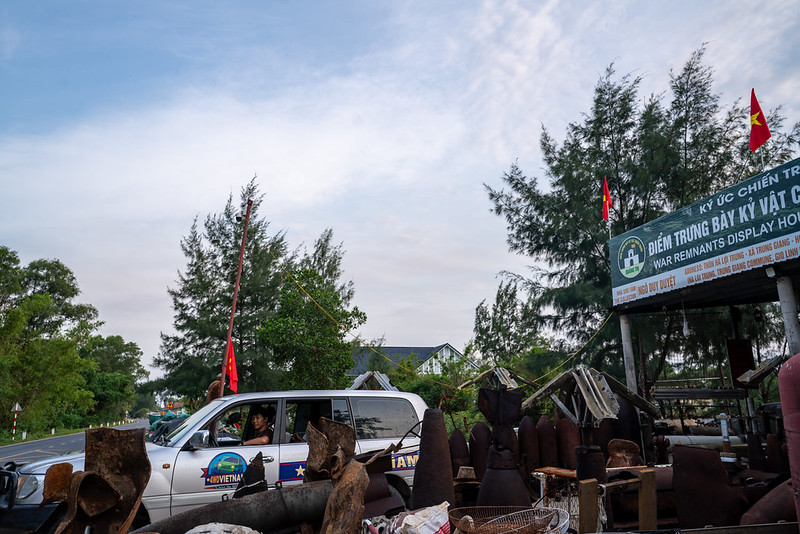
We continued into the evening and reached Kỳ Anh around 8:15 p.m. It had been a day of rare wildlife, one of Vietnam’s most beautiful driving roads and some of its heaviest history. By then, both my mind and my body were tired.
Day 7 – The road that did not work
The final day began at 7:30 a.m. with a visit to the Nguyễn Du memorial in Tiên Điền. Then the road became long, straight and, honestly, boring. After days of coastal views and unexpected discoveries, there was almost nothing that made us want to stop or turn away from the highway.
That disappointment was still useful. Scouting is not only about finding good tracks. It is also about identifying the sections that add nothing to the journey. A road can connect two points efficiently and still be the wrong road for an experience. This part of the return route would need to be changed or treated simply as a transfer.
After lunch in the unusually quiet seaside town of Sầm Sơn, we made our final visit at the Citadel of the Hồ Dynasty. A guide and an electric cart took us between the remains, including the enormous stone gates built at the end of the fourteenth century. At 4:50 p.m., we returned to the vehicles for the last time. Nobody suggested another detour.
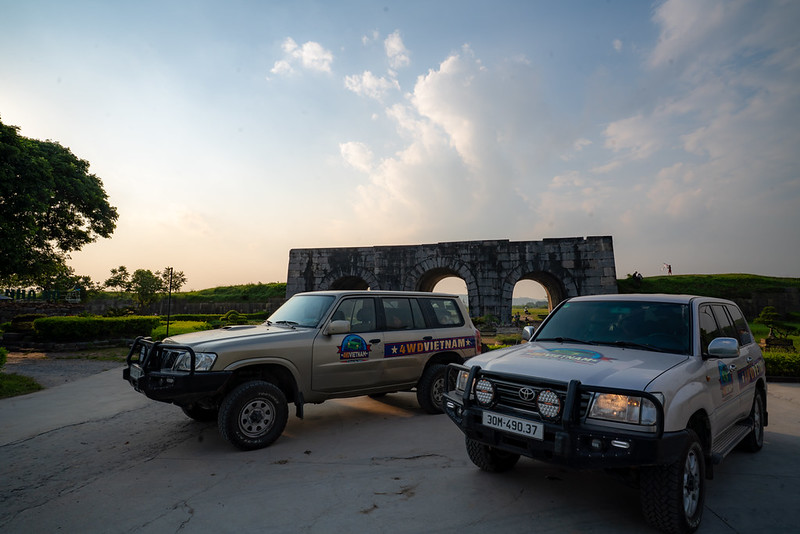
At around 8:00 p.m., the familiar lights of Hanoi appeared. Seven days after leaving Saigon, and thirteen days after first driving south, the two 4WDs brought us home. There was no finish line, only familiar streets, tired faces and the relief of finally stopping.
What the return journey taught us
The road north tested something different from the road south. It showed us how the vehicles behaved in loose sand, deep waterlogged mud and long coastal stages. It also reminded us that capability is not only about pushing forward. Sometimes the right decision is to stop before the sand becomes too soft, to abandon a route that adds nothing or to give the driver and vehicle a proper rest.
The two 4WDs did more than carry us back to Hanoi. They connected fishing villages, salt fields, Cham towers, mountain passes and places of remembrance. They gave us the freedom to follow the coast, but also the responsibility to read the conditions and respect the places we entered.
When I remember the journey home, I think of both cars sitting in the same mud hole, the relief when the first wheels finally moved, the decision to turn back in the dunes and the silence inside the vehicles after Sơn Mỹ and Quảng Trị. The difficult sections, failed roads and unexpected stops were not interruptions. They were what made the return journey real.