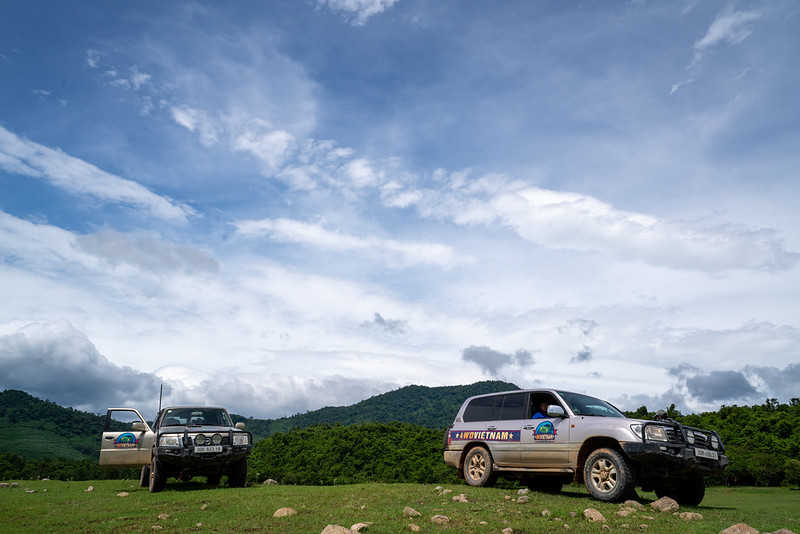
The most important question is: How many hours will we actually spend in the car each day?
It is a very good question. A route may look short on the map, but the map does not show the condition of the road. Add a mountain market, a lunch in a small village and muddy tracks after the rain, and a short distance can become a full day.
That is not a problem when the journey is planned properly. Your 4×4 is not just a way to move between hotels; the road is one of the best parts of the experience. It takes you beyond the main highlights, into the valleys, forest and highland communities that make Northern Vietnam so special. The most important thing is to choose a route that suits your time, your group and your way to travel.
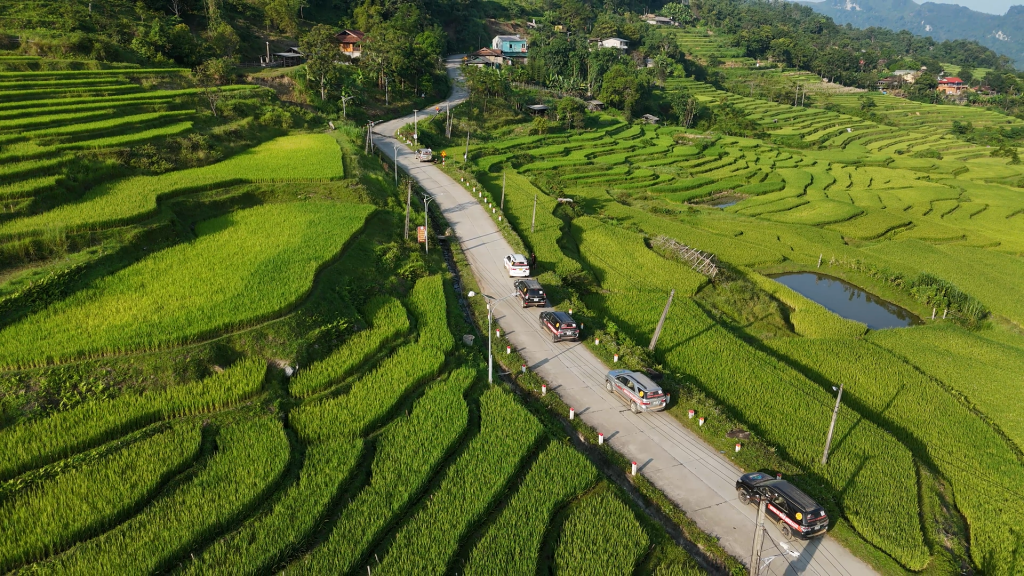
Northeast or Northwest: two different journeys
Northern Vietnam is famous for its great mountain region, but the Northeast and Northwest feel quite different once you are on the road.
The Northwest is defined by roads that climb through long mountain passes, drop into deep valleys and rise again towards places such as Mu Cang Chai, Sapa and Y Ty. This side of the north is a very good choice if you love panoramas, dramatic roads and the feeling of travelling higher with every turn.
It also asks for patience. Towns can be far apart, and even a mostly paved day may involve hours of climbing and descending. Passes such as O Quy Ho and Khau Pha are not roads you want to rush. You travel there for the views, the changing light and the small stops along the way.
The Northeast is gentler. Around Ba Be and Cao Bang, limestone mountains rise from green valleys, rivers run beside the roads and villages appear between rice fields. A day on Ba Be Lake gives you time to rest and breathe instead of being on the road again. While near Ban Gioc Waterfalls and Lang Son combine karst scenery with quieter roads.
If you enjoy mixing road travel and boat trips, village walks and time in smaller communities, the Northeast may suit you best. If you cannot choose, the two regions can be connected through Ha Giang, but you will need enough days to enjoy the route.
Northwest | Northeast | |
Signature places | Mu Cang Chai, Sa Pa, Y Ty, Ta Xua | Ba Be, Bao Lac, Cao Bang, Ban Gioc |
Landscape | High passes, terraces, cloud ridges | Karst peaks, rivers, lakes, waterfalls |
Driving character | Long climbs and descents | Rolling valleys, quieter roads |
Time outside the vehicle | Viewpoints, ridge walks, markets | Boat trips, village walks, swimming |
Overnight style | Town hotels, mountain homestays | Village homestays, small-town hotels |
Best for | Panoramas and mountain drama | A slower pace and rural life |
How many days do you really need
There is no perfect number, but there is a difference between a quick introduction and a true mountain expedition.
Route | Days | Region | Shape of the trip |
|---|---|---|---|
3 | Northeast | Two nights by Ba Be Lake, a boat day and about 20 km of village tracks | |
8 | Northeast | Ba Be, Bao Lac, Cao Bang, Ban Gioc Falls, Lang Son, Ha Long Bay | |
8 | Northwest to Ha Giang | Ta Xua, Ngoc Chien, Mu Cang Chai, Sa Pa, Y Ty, Bac Ha, Ha Giang | |
12 | Both | Mai Chau, Mu Cang Chai, Sa Pa, Ha Giang, Meo Vac, Ba Be, Cao Bang, Lang Son, Ha Long |
- Three days gives you a first taste. A short journey from Hanoi to Ba Be includes small roads, a lake and boat experience, and a village stay.
- Eight days lets you explore one region properly. You might follow the Northwest from Ta Xua and Ngoc Chien to Mu Cang Chai, Sapa and Ha Giang, or stay in the Northeast through Ba Be, Cao Bang and Lang Son before finishing near Halong Bay. There is enough time to explore various roads.
- Twelve days or more opens up the whole north. With this amount of time, you can connect the Northwest and Northeast, include more off-road sections and balance long drives with other outdoor experiences or slower mornings.
More days do not necessarily mean more destinations, you can explore at your own pace, make sure you do not rush and have time to really enjoy the trip.
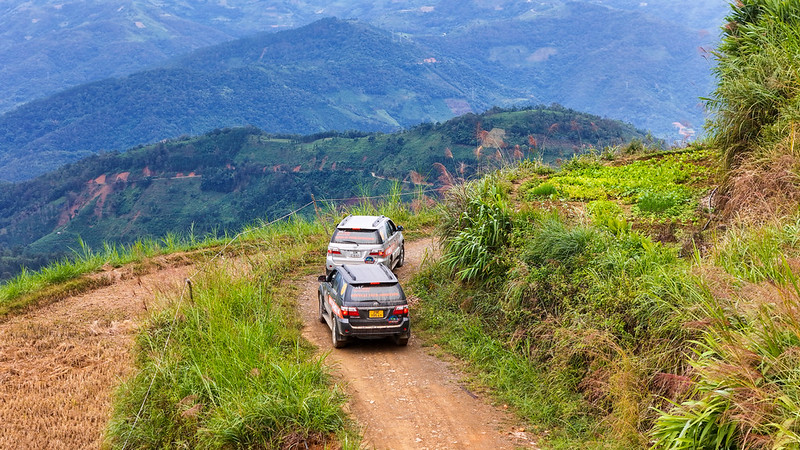
What a driving day really feels like
In Northern Vietnam, kilometres can be misleading. Two hundred kilometres on a good mountain road may be comfortable while eighty kilometres through forest, mud and stream can fill almost the whole day.
Our current routes show the range:.
- Short, rough days. Ta Xua to Ngoc Chien is about 80 km, almost all off-road, through old forest and across streams. It fills the day without feeling long, and ends at a hot spring.
- Long, scenic days. Ngoc Chien to Sa Pa is about 220 km, crossing the Mu Cang Chai terraces and O Quy Ho Pass. Most of it is paved, but the stops are the point.
- Mixed days. Sa Pa to Bac Ha via Y Ty is about 180 km, including around 80 km of rugged ridge road along the border.
When we plan these days, we want you to arrive before dark whenever the conditions allow. We also plan regular breaks at viewpoints, markets, villages cafés and places that are actually worth stopping for.
The road does not always follow the plan
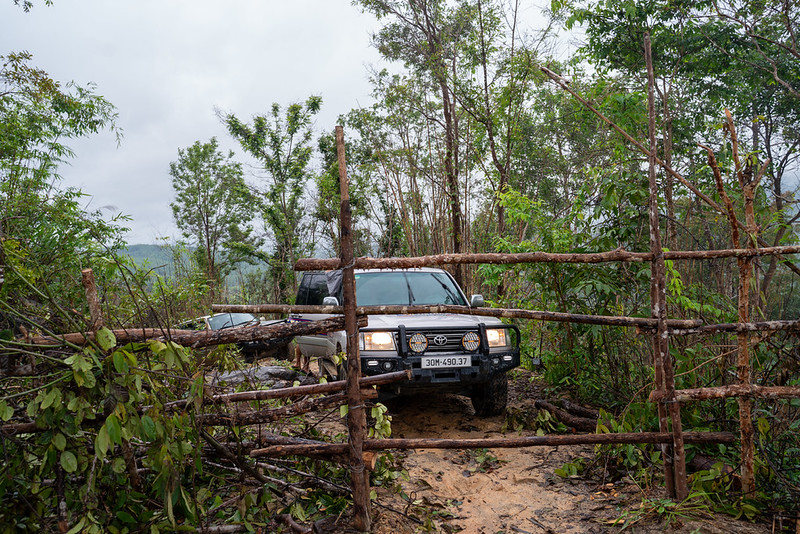
Mountain travel often comes with an element of the unexpected: heavy rain can turn a firm track into deep mud, or roadworks may block a section that was open the week before. This is where knowledge matters because a good route is not just a line downloaded from a map. Our team checks the conditions, speaks with people along the way and adapts when necessary. It can mean changing the order of two stops or leaving an off-road section for another trip.
Turning back is not the most exciting decision, but the aim is to have an adventure, not to force a vehicle through simply because the original programme said so.
Comfort matters more than you may expect
A Northern Vietnam 4×4 journey can be rugged without being uncomfortable. The difference comes from the vehicle, the daily pace and the places where you stop for the night.
Our routes use suitable 4×4 vehicles with the clearance and traction needed for broken mountain roads and selected off-road sections. You need room for the luggages, camera equipment, water and the jacket you will put on and remove several times as the altitude changes.
Inside the vehicle, the most useful luxury is space. If you have difficulties with winding roads, tell us before departure. Sitting near the front, taking breaks more often and starting with a shorter driving day can make a real difference.
Accommodations change with the landscapes. In Sapa, Ha Giang or Cao Bang, you can usually expect a hotel or a lodge, while in small villages you can often expect a family homestay. These nights are often among the most memorable, with local home-cooked food, and conversations that continue after dinner.
Homestays are very simple: private rooms and bathrooms are not available everywhere. If a particular level of comfort is important to you, tell us from the start. We can then build the route around the right overnight stops rather than trying to solve it after a long day on the road.
The best parts happen when you step out of the vehicle
A good 4×4 itinerary should never feel like several days spent looking through a windscreen. The vehicle gets you there; the real experience begins when the doors are open.
- Walk a little and follow the ridge known as the Dinosaur Backbone at Ta Xua, take a forest path near Ba Be Lake or wander through a village while dinner is being prepared
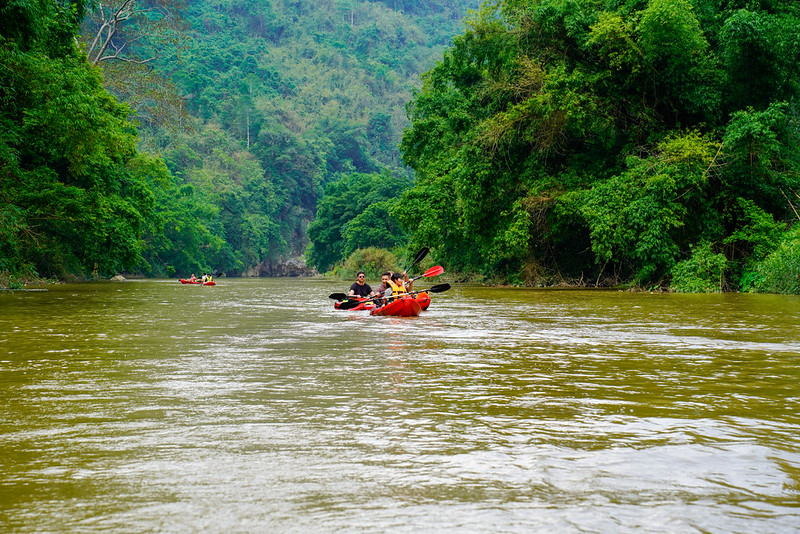
- Spend time on the water. Cross Ba Be Lake by boat, kayak, swim under a hidden waterfall or relax in a mineral hot-spring at Ngoc Chien.
- Stop for everyday life. Highland markets, roadside tea stalls and family workshops often tell you more about the region than a scheduled viewpoint ever could.
- Leave time for the view. O Quy Ho Pass, Heaven’s Gate and Ma Pi Leng deserve more than a simple protograph taken through the window.
When you compare two itineraries, do not only count the kilometres or the destination. Look at what happens between breakfast and dinner. This will tell you whether the journey will feel rich or rushed.
Who drives ?
You can experience Northern Vietnam with an experienced local driver, leaving you free to watch the scenery while your guide handles the route and timing. For many guests, this is the most relaxing option, especially on narrow mountain roads.
Confident drivers may prefer a guided self-drive convoy on selected routes. That gives you the pleasure of taking the wheel while still travelling with local support. The vehicle, licence requirements, road conditions and level of off-road experience all need to be discussed before confirming the journey. Self-drive is not available in the same way on every itinerary, so it should be planned with the team rather than assumed.
Choosing the right season
There is no single best month for the whole of Northern Vietnam. Spring is usually full of fresh green landscapes and misty mornings. Summer is lush but wetter, which can make dirt tracks more difficult. September and October are popular for golden rice terraces in places such as Mu Cang Chai, while the cooler winter months can offer clear views but colder nights.
Weather is never predictable. We choose the route around the season, then keep enough flexibility to adjust it when the mountains have other ideas.
Frequently Asked Questions
Is a 4×4 journey suitable if I do not drive
Yes. You can choose to travel with an experienced local driver and enjoy the trip as a passenger. A shorter route with more boat trips and walks, such as Ba Be, is a good introduction.
Are routes completely off-road
No. Most itineraries combine mountain roads, rural backroads and selected off-road sections. The exact balance depends on the route, the season and conditions.
Can families join
Yes. As long as the daily pace suits the children and everyone is comfortable with the winding road. We can customize the itinerary with short driving days and add more active stops along the way.
Can the itinerary change
Absolutely. Our published tours are starting points. Tell us your dates, group size, interests, comfort expectations and off-road experience, and we will shape the route around you.
Ready to explore Northern Vietnam by 4×4
Contact the 4WD team with your requests, including the dates and group sizes, and your preferred level of adventure, and we will start shaping the right journey for you.